Five: Influences (As Of Right Now)
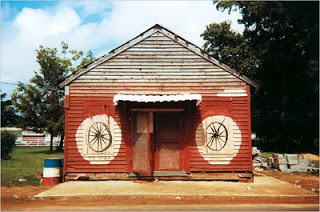
William Christenberry
I am drawn to Christenberry's unique approach to visual history. His photographs of the same structure over many years depict the changes, both deterioration and rebirth, of unique landmarks throughout the southern United States.
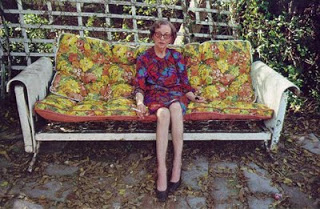
William Eggleston
Eggleston gave us color photography, or so history will ultimately read. It's hard to be a color photographer without mentioning his influence. I do struggle a bit with the haphazard look of some of his compositions, but, when everything comes together, few can match his genius.
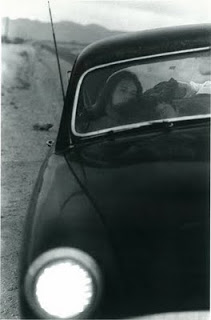
Robert Frank
My first photo book was Robert Frank's The Americans. I received the book as a gift after randomly listing it on a Christmas list. It didn't take long for me to get hooked on the idea of traveling the country, photographing everything along the way.
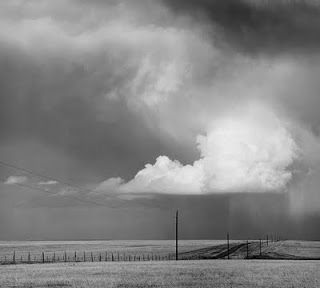
David Plowden
David Plowden has photographed many subjects over the course of his life, everything from trains to steel workers. But what resonates most with me is his work in small town America, especially his A Sense Of Place monograph. Plowden's photography of rural Iowa and other states has a sort of quiet, dignified quality to it that I hope to be able to approach some day.
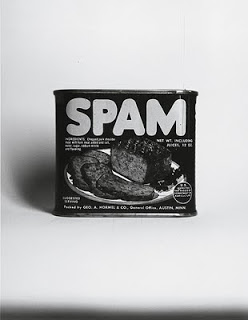
Ed Ruscha
Although more famous as a painter, photography is what Ed Ruscha uses as a sort of visual sketchbook to gather ideas from. His photography is often mundane; a collection of buildings along a single street or a series of gas stations. But his use strong use of typography translates this work into iconic imagery.
Image: Boyer Chute (2009)

Today felt like a good day to get out and hit the road. I revisited a couple places I wanted to photograph, Fort Atkinson and Boyer Chute, and spent some time near Prague in an attempt to work on my latest project. At this point, I'm still not exactly sure how to pursue the whole idea. It is time to evolve and grow. Just need to figure out how to go about it.
The above photograph is from the Boyer Chute National Wildlife Refuge. It's a nice quiet place, tucked into a bend in the Missouri River east of Fort Calhoun.
Also visited: Fremont, Cedar Hill, Linwood, Abie, Bruno and Prague.
Image: Untitled (2003)
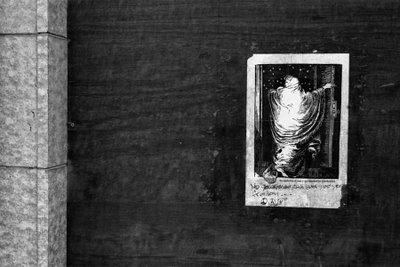
I spent a day off last week going through my old image files to make sure everything is backed up multiple times. This photograph was taken for an intermediate photography class for a pushed film assignment. It's still one of my favorite photographs.
Going through early photographs is always a bit of a revelation. There's always a surprise; something that had never really caught your eye before. The lack of a preconceptions can make for surprisingly interesting work. After looking through hundreds of black and white photographs, I find myself wanting to move back in that direction. Maybe next year.
Five: Films with Photographers
 Blow-Up (1966)
Take the consummate swingin' 1960's photographer with his womanizing too-cool-for-you lifestyle and put him right in the middle of a murder mystery. Then give it the kind of symbolic ending that makes a great majority of people hate European films.
The best scenes in Blow-Up find the photographer endlessly enlarging negatives to better see the evidence of a crime that may or may not have happened.
 City Of God (2002)
A young man chooses between a life as a gang member in a violence-plagued slum in Rio De Janeiro or something more. He is drawn to a camera, ultimate choosing to document the tragedies around him as a means to rise above the poverty and hopelessness of his situation.
City Of God is a powerful statement of perseverance and one of the best movies that many have never seen.
 One Hour Photo (2002)
A lonely and psychotic man works in the photo lab at a big box retailer. His obsession with one of his customers gets out of hand, causing him to lose his job and embark on what he sees as a noble mission to punish a husband for his infidelities.
Robin Williams plays as convincing of a psychopath as you'll ever see. He's remarkably creepy and unsettling, but somehow we feel compelled to empathize with him.
 Pecker (1998)
A wide-eyed kid from Baltimore takes some photographs of the people in his neighborhood. A snooty New York art dealer discovers his work at the local deli and turns him to a star in the art world. And John Waters directs, so there's a good dose of filthy humor and outright bizarre characters.
Pecker is a love-hate sort of film. Either you laugh and eat it up or you sit and think about how much you despise everything about it for two hours. I think it's brilliant.
 Rear Window (1954)
What's a photographer to do when he is confined to a bed in his apartment? Spy on the neighbors across the courtyard with a telephoto lens, find one of the neighbors attempting to cover up a crime, and end up face to face with the murderer himself after he knows he has been discovered.
I'm a huge Hitchcock fan, and Rear Window is one of his best. It's brilliant how the entire film is shot within one apartment and its view across a courtyard.